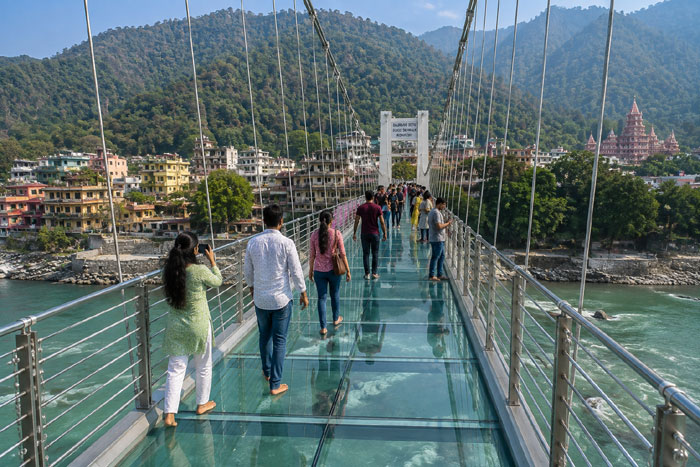
Bajrang Setu is one of the newest landmarks in Rishikesh, Uttarakhand, built over the sacred River Ganga near the historic Lakshman Jhula. Designed as a modern suspension bridge with a glass skywalk section, it combines engineering, tourism, and spirituality. The bridge has quickly become a major attraction for pilgrims, photographers, and adventure seekers visiting the Yoga Capital of the World.
History of Bajrang Setu
For nearly a century, Lakshman Jhula served as the primary pedestrian bridge connecting Tapovan and Jonk (Swargashram area). According to Hindu mythology, Lord Lakshmana crossed the Ganga at this location using a rope bridge, making the site highly sacred.
However, after decades of use, Lakshman Jhula was declared structurally unsafe and closed in 2019. Its closure created significant inconvenience for residents, pilgrims, and tourists who had to take long detours.
To restore connectivity while introducing a modern tourist attraction, the Uttarakhand Government planned Bajrang Setu. The bridge was constructed close to the original Lakshman Jhula site and includes modern engineering features, improved safety standards, and a glass viewing section over the Ganga. It has become a symbol of the city's transition from an aging landmark to a safer and more sustainable structure.
Why is it Called Bajrang Setu?
The bridge is named after Lord Hanuman, also known as Bajrang Bali, one of Hinduism's most revered deities. Hanuman symbolizes strength, devotion, and courage, making the name especially meaningful in the spiritual city of Rishikesh.
Architecture & Design
Some of the notable features include:
- Modern suspension bridge design
- Transparent glass skywalk panels
- Panoramic views of the Ganga River
- LED lighting during evenings
- Dedicated pedestrian pathways
- Improved safety compared to the old bridge
- Beautiful viewpoints for photography
The bridge was designed not only to improve transportation but also to create a memorable tourist experience.
Bajrang Setu Ticket Price (2026)
Current access to the bridge itself is generally free, but the Uttarakhand government has approved a user-fee system for the glass skywalk section, which may be implemented or adjusted over time. Always verify the latest charges before your visit.
| Visitor | Ticket Price |
|---|---|
| Bridge Access | Free |
| Glass Skywalk | User fee may apply (check locally for current rates) |
Timings
The bridge is accessible throughout the day.
Recommended visiting hours:
- Early Morning: 6:00 AM – 9:00 AM
- Evening: 4:30 PM – 7:30 PM
Sunrise and sunset provide the most spectacular views of the Ganga and surrounding hills.
Best Time to Visit Bajrang Setu
- September to November: Pleasant weather, crystal-clear mountain views, ideal for photography.
- February to April: Comfortable temperatures, perfect for sightseeing, adventure activities available.
- Monsoon (July–August): Lush green scenery, but heavy rainfall can disrupt travel.
- Winter (December–January): Cold mornings and evenings, fewer crowds, misty Himalayan landscapes.
How to Reach Bajrang Setu
By Air
Nearest Airport: Jolly Grant Airport (Dehradun) – approximately 22 km. Taxi services are easily available.
By Train
Nearest railway stations:
- Rishikesh Railway Station (5–6 km)
- Haridwar Junction (25 km)
By Road
Rishikesh has excellent road connectivity from Delhi, Dehradun, Haridwar, and Chandigarh. Regular buses and taxis operate daily.
Distance from Major Cities
| City | Distance |
|---|---|
| Haridwar | 25 km |
| Dehradun | 45 km |
| Delhi | 240 km |
| Chandigarh | 210 km |
Things to Do at Bajrang Setu
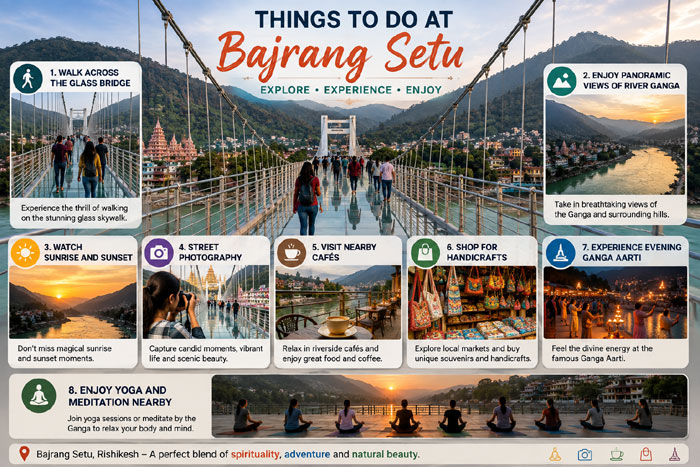
- Walk across the glass bridge
- Enjoy panoramic views of River Ganga
- Watch sunrise and sunset
- Street photography
- Visit nearby cafés
- Shop for handicrafts
- Experience evening Ganga Aarti
- Enjoy yoga and meditation nearby
Nearby Attractions
1. Ram Jhula
Distance: ~2 km. Another iconic suspension bridge lined with temples, ashrams, and cafés.
2. Triveni Ghat
Distance: ~5 km. The most famous place for the evening Ganga Aarti.
3. Beatles Ashram
Distance: ~3 km. A world-famous meditation center visited by The Beatles in 1968.
4. Neer Garh Waterfall
Distance: ~6 km. A beautiful waterfall with a short trek.
5. Parmarth Niketan
One of India's largest yoga ashrams.
6. Neelkanth Mahadev Temple
Approximately 30 km away and one of Uttarakhand's most revered Shiva temples.
Photography Tips
- Visit before 8 AM for fewer crowds.
- Sunset offers warm golden light over the Ganga.
- Use a wide-angle lens to capture the full bridge.
- Night lighting creates excellent long-exposure shots.
- Respect any restrictions in the glass walkway area.
Travel Tips
- Wear comfortable walking shoes.
- Carry water during summer.
- Keep your camera ready for scenic views.
- Avoid visiting during heavy rain.
- Do not lean over railings or block pedestrian movement.
- Visit on weekdays for a quieter experience.
Suggested Half-Day Itinerary
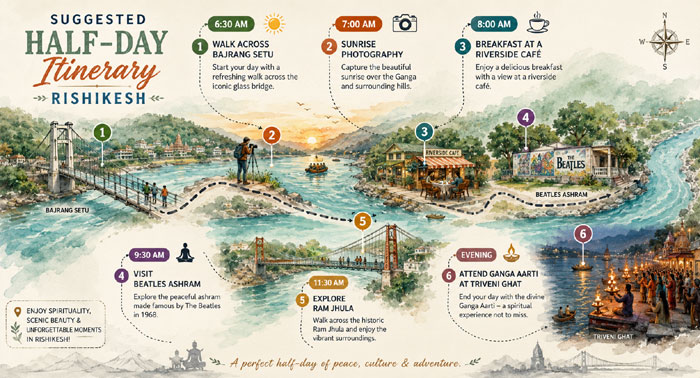
| Time | Activity |
|---|---|
| 6:30 AM | Walk across Bajrang Setu |
| 7:00 AM | Sunrise photography |
| 8:00 AM | Breakfast at a riverside café |
| 9:30 AM | Visit Beatles Ashram |
| 11:30 AM | Explore Ram Jhula |
| Evening | Attend Ganga Aarti at Triveni Ghat |
Frequently Asked Questions (FAQs)
Yes. It was constructed near the old Lakshman Jhula site after the historic bridge was closed due to structural safety concerns.
The bridge is generally free to access, although the glass skywalk may have a separate user fee depending on current government implementation.
Early morning (6–8 AM) and sunset (5–7 PM) provide the best lighting and fewer crowds.
Most visitors spend 30–60 minutes, though you can easily combine it with nearby attractions for a half-day outing.
Yes. The bridge has been built with modern engineering standards, and the glass sections use multi-layered toughened glass with monitoring and crowd-management measures.
Yes. The bridge is suitable for families, though anyone uncomfortable with heights should take extra care on the glass viewing sections.
Bajrang Setu represents a blend of modern engineering, spiritual heritage, and scenic beauty. Built to replace the aging Lakshman Jhula, it offers visitors a safe crossing over the Ganga while providing panoramic river views and a unique glass skywalk experience.
Combined with nearby attractions such as Ram Jhula, Triveni Ghat, Beatles Ashram, and Parmarth Niketan, it is an essential stop on any Rishikesh itinerary.