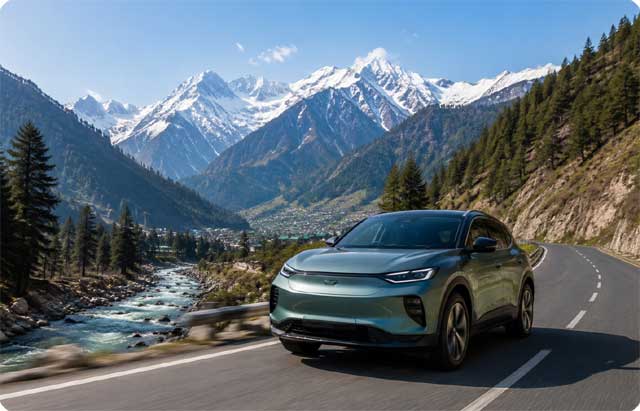
Travelling from Delhi to Manali in an Electric Vehicle (EV) is becoming increasingly convenient as India's EV infrastructure continues to expand. What was once considered a challenging road trip for EV owners is now a comfortable and well-planned journey, thanks to the growing number of EV charging stations enroute Delhi to Manali. Whether you drive a Tata Nexon EV, MG ZS EV, BYD Atto 3, Mahindra XUV400, Hyundai Kona, Kia EV6, or any other electric car, you can enjoy an eco-friendly and economical road trip to the beautiful hill station of Manali.
The road distance between Delhi and Manali is approximately 540 km, depending on your starting point and the route you choose. The drive generally takes 11 to 13 hours, excluding charging and refreshment breaks. Proper planning, monitoring your battery level, and identifying charging stations in advance will ensure a smooth and hassle-free journey. Upon reaching Manali, you'll also find several electric vehicle charging stations in Manali, allowing you to recharge before exploring nearby attractions like Solang Valley, Atal Tunnel, Sissu, and Rohtang Pass.
Best Route from Delhi to Manali by EV
The most preferred route follows NH-44 and NH-3, offering good road conditions and the highest concentration of charging stations.
Major Cities Along the Route
- Delhi
- Sonipat
- Murthal
- Panipat
- Karnal
- Kurukshetra
- Ambala
- Zirakpur
- Chandigarh
- Rupnagar
- Kiratpur Sahib
- Bilaspur (Himachal Pradesh)
- Sundernagar
- Mandi
- Kullu
- Manali
This route has numerous restaurants, fuel stations, hotels, and highway facilities where charging infrastructure is continuously improving.
Why Travel from Delhi to Manali in an Electric Vehicle?
Travelling by EV is not only environmentally responsible but also significantly reduces fuel costs. Himachal Pradesh's scenic mountain roads are ideal for electric vehicles because regenerative braking helps recover battery energy while descending hills.
💡 Get Information about Toll Tax breakdown from Delhi to Manali
Benefits of an EV Road Trip
- Lower travel cost compared to petrol and diesel vehicles.
- Environment-friendly with zero tailpipe emissions.
- Quiet and smooth driving experience.
- Regenerative braking increases battery efficiency in hilly areas.
- Growing network of fast charging stations.
- Charging facilities available at several hotels and resorts in Manali.
- Reduced maintenance costs compared to conventional vehicles.
EV Charging Stations Enroute Delhi to Manali
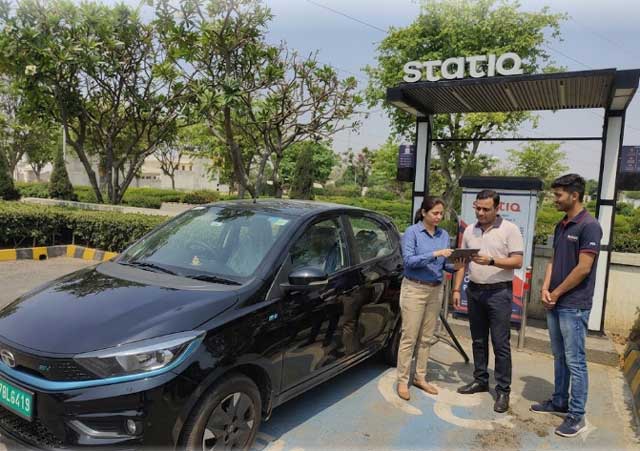
One of the biggest concerns for EV owners is finding reliable charging stations during long-distance travel. Fortunately, the Delhi-Manali highway now has numerous charging points operated by various charging networks and fuel companies.
Popular Charging Locations
- Delhi NCR
- Murthal
- Karnal
- Ambala
- Chandigarh
- Zirakpur
- Bilaspur
- Sundernagar
- Mandi
- Kullu
- Manali
Depending on your vehicle's battery capacity and driving style, most EVs require only 2 to 3 charging stops during the entire journey.
Electric Vehicle Charging Stations in Manali
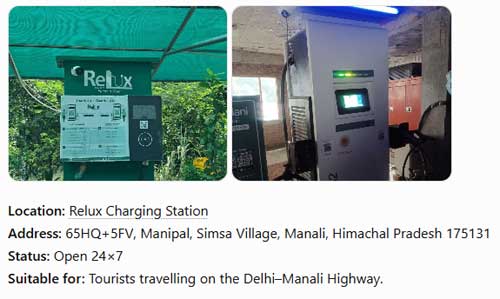
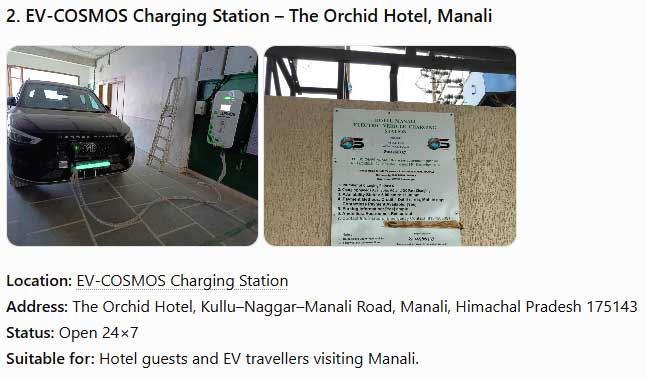
After reaching Manali, charging your vehicle is easy as several hotels, resorts, commercial parking areas, and public charging hubs now offer EV charging facilities.
Places Where Charging is Available
- Premium Hotels
- Luxury Resorts
- Public Charging Stations
- Fuel Stations
- Commercial Parking Areas
- Private Charging Networks
If you're planning local sightseeing or visiting nearby destinations like Solang Valley or Atal Tunnel, it is advisable to recharge your vehicle overnight.
Planning Your Charging Stops
Every EV offers a different driving range depending on battery size, weather conditions, passenger load, and driving habits.
Estimated Charging Requirements
- 250–300 km: 3–4 Stops
- 350–450 km: 2–3 Stops
- 500 km or more: 1–2 Stops
Always keep a battery reserve of at least 15–20% before reaching your next charging station.
Preparing Your EV Before the Journey
Proper preparation can make your road trip comfortable and stress-free.
Battery Preparation
- Charge the battery to 100% before leaving Delhi.
- Check battery health.
- Inspect tyre pressure.
- Ensure vehicle software is updated.
- Carry your charging cable.
Plan Your Route
- Mark charging stations in advance.
- Keep alternative charging locations as backup.
- Prefer fast chargers whenever possible.
- Check charger availability through charging apps.
Driving Tips for Mountain Roads
Driving in the hills requires a slightly different approach than highway driving.
Best Driving Practices
- Use Eco Mode whenever possible.
- Avoid sudden acceleration.
- Utilize regenerative braking while descending.
- Drive at a steady speed.
- Maintain a safe distance from other vehicles.
- Avoid unnecessary overtaking on mountain roads.
These practices improve battery efficiency and enhance safety.
Charging Time
Charging time depends upon the charger type.
Typical Charging Duration
- 7.2 kW AC Charger: 6–8 Hours
- 11 kW AC Charger: 4–6 Hours
- 30–60 kW DC Fast Charger: 45–90 Minutes
- 100+ kW Ultra Fast Charger: 20–40 Minutes
Whenever possible, combine charging sessions with meal breaks to save travel time.
Best Charging Strategy
An efficient travel plan is to charge while taking breaks.
Suggested Schedule
- Breakfast stop at Murthal
- Charging break at Karnal or Chandigarh
- Lunch while charging
- Tea break and top-up charging at Mandi
- Arrive in Manali with sufficient battery
This strategy minimizes waiting time while ensuring adequate battery charge throughout the trip.
Things to Carry During Your EV Trip
Always carry essential items for a comfortable journey.
Must-Have Items
- EV Charging Cable
- Portable Charger (if supported)
- Extension Cable (where permitted)
- Tyre Inflator
- Puncture Repair Kit
- First Aid Kit
- Torch
- Mobile Power Bank
- Vehicle Documents
- FASTag
- Drinking Water
- Emergency Contact Numbers
Estimated Cost of Travelling by EV
Although charging prices vary by provider, travelling by EV is generally 40–70% cheaper than travelling in a petrol or diesel vehicle. Many hotels in Manali also provide complimentary or discounted charging facilities for guests.
Is It Safe to Travel to Manali by EV?
Yes. Thousands of EV owners now successfully travel to Himachal Pradesh every year. The continuous expansion of EV charging stations enroute Delhi to Manali has made long-distance electric vehicle travel far more convenient than before. As long as you plan your charging stops, monitor your battery level, and drive responsibly, the journey is comfortable, economical, and environmentally friendly.
Final Thoughts
Travelling from Delhi to Manali by an electric vehicle is now a practical, affordable, and eco-friendly option. With a growing network of EV charging stations enroute Delhi to Manali and several electric vehicle charging stations in Manali, range anxiety is no longer a major concern. Careful planning, efficient driving, and timely charging will ensure a memorable Himalayan road trip while reducing both fuel costs and carbon emissions. Whether you're travelling with family, friends, or on a solo adventure, an EV road trip to Manali offers a perfect blend of sustainability, comfort, and breathtaking scenery.
Frequently Asked Questions (FAQs)
Yes. With proper planning and the availability of multiple charging stations, travelling from Delhi to Manali by EV is convenient.
Yes. Charging stations are available at Delhi, Murthal, Karnal, Ambala, Chandigarh, Bilaspur, Mandi, Kullu, and Manali.
Yes. Several hotels, resorts, public charging stations, and fuel stations in Manali provide EV charging facilities.
Most electric vehicles require two to four charging stops depending on battery capacity and driving conditions.
Most major charging networks provide mobile apps that display charger locations, live availability, navigation, and payment options.
Yes. DC fast chargers are available at many locations along the highway.
Yes. Cold temperatures may slightly reduce battery range, so it's advisable to keep an adequate battery reserve.
Yes. Many hotels and resorts offer overnight EV charging for their guests.
Yes. Regenerative braking helps recover battery energy while driving downhill, improving overall efficiency.
Yes. Charging an EV generally costs significantly less than refuelling a petrol or diesel vehicle, making it a more economical and environmentally friendly option.